


What Is the Role of PCB Assembly in Server and Data Center Computers?

Updated: Aug 18

Behind every high-performing server and data center is a complex network of electronic systems working seamlessly together. At the core of these systems lies PCB assembly, a critical process that directly impacts performance, reliability, and scalability.
As data centers continue to power cloud computing, AI workloads, and enterprise applications, the role of PCB assembly in data center environments has become more important than ever. From ensuring uninterrupted operations to supporting high-speed data processing, PCB assembly is the foundation of modern server infrastructure.
Key Takeaways
PCB assembly forms the core electronic backbone of servers and data centers.
High-quality PCB assembly improves performance, uptime, and reliability.
Assembled PCBs power motherboards, storage, networking, and power systems.
Server PCBs require HDI layouts, precise placement, and strict standards.
Strong inspection and testing greatly reduce failures in 24/7 operation.
A2Z Electronics delivers end-to-end PCB assembly services for modern data centers.
Table of Contents
The Role of PCB Assembly in Server and Data Center Computers
Importance of PCB Assembly in Server and Data Center Computers
Key PCB Assembly Requirements for Server and Data Center Computers
How PCB Assembly Improves Server and Data Centers Performance
PCB Assembly Capabilities Used in Modern Server and Data Center Hardware
How A2Z Electronics Supports PCB Assembly for Server and Data Center?
Future Trends in PCB Assembly for AI Servers and Data Centers
The Role of PCB Assembly in Server and Data Center Computers

The role of PCB assembly in data center environments goes far beyond simply connecting components. It involves precise placement and soldering of electronic parts onto printed circuit boards, forming the backbone of server hardware. In PCB assembly in server and data center computers, this process enables communication between processors, memory, storage, and networking components, so signals move accurately and efficiently across the system.
Whether it is server PCB assembly for enterprise applications or AI server PCB assembly for advanced workloads, the quality of assembly directly affects how well a system performs under demanding conditions.
Enabling High-Speed Data Paths
Carefully designed and assembled traces, vias, and layers create stable high-speed paths between CPUs, memory, storage, and network interfaces. In PCB assembly for servers & data centers, this helps prevent bottlenecks, latency, and data errors.
Providing Stable Power and Ground
Robust data center PCB assembly delivers clean power and solid grounding for critical components. Reliable power planes and correctly assembled decoupling networks support consistent performance under heavy load.
Integrating Complex Server Functions
Modern server PCBA manufacturing combines compute, memory, management, and connectivity on dense boards. Quality enterprise server PCB assembly keeps these functions working together reliably in compact, high-density data center servers.
Supporting AI and Accelerator Workloads
In AI server PCB assembly, GPUs, accelerators, and high-bandwidth memory must be mounted and connected with careful attention to thermal and signal integrity. This directly influences training speed, inference performance, and long-term reliability of AI servers.
Importance of PCB Assembly in Server and Data Center Computers
Data centers operate 24/7, often under heavy computational loads. In such environments, even minor inefficiencies can lead to significant performance issues or downtime.
This is where high-quality data center PCB assembly becomes essential. Proper assembly ensures:
Consistent system performance under continuous operation
Reduced risk of hardware failures
Efficient power distribution and thermal management
Long-term reliability for mission-critical applications
In short, PCB assembly in server and data center computers is not just a manufacturing step it is a key factor in operational stability.
Where Assembled PCBs Are Used in Data Center Hardware
Assembled PCBs are present across nearly every component within a data center. Their applications include:
Server motherboards and processor boards
Storage systems, RAID controllers, and NVMe backplanes
Network switches, routers, firewalls, and load balancers
Power supply units, PDUs, UPS and backup power systems
Cooling, environmental monitoring, and fan control systems
Baseboard management controllers (BMCs) and remote management modules
Interface and adapter cards (NICs, HBAs, GPU/accelerator cards)
Edge gateway devices and security appliances deployed alongside core racks
Each of these components relies on precise PCB assembly for data centers to ensure seamless integration and performance across the entire data center ecosystem.
Key PCB Assembly Requirements for Server and Data Center Computers
Server and data center environments demand a higher standard of PCB assembly compared to conventional electronics. Key requirements include:
High-density interconnect (HDI) designs for compact layouts
Precision component placement for complex architectures
Advanced soldering techniques for reliability
Thermal management considerations for heat-intensive operations
Compliance with industry standards and certifications
Enterprise server PCB assembly must meet strict performance and durability benchmarks to handle continuous workloads without compromise.
How PCB Assembly Improves Server and Data Centers Performance
Well-executed PCB assembly directly enhances the performance of servers and data centers. It ensures optimal signal integrity, minimizes electrical noise, and supports high-speed data transmission.
In high-performance environments such as AI and cloud computing, even slight inefficiencies can create bottlenecks. Reliable PCB assembly helps eliminate these issues by maintaining consistent electrical connections and reducing latency.
This is particularly important in AI servers , where processing speed and data accuracy are critical.
PCB Assembly Capabilities Used in Modern Server and Data Center Hardware
Modern data center electronics manufacturing relies on advanced PCB assembly capabilities to meet evolving demands. These include:
Surface Mount Technology (SMT) for High-Density Placement
SMT assembly allows tiny components to be mounted directly onto the surface of the PCB, enabling very compact, high‑density layouts. For server and data center boards, this means more processing power, memory, and interfaces can be packed into the same footprint without sacrificing signal integrity.
Through-Hole Assembly for Structural Strength
While SMT dominates most designs, through‑hole assembly is still essential for connectors, large components, and parts exposed to mechanical stress. Using plated through‑holes provides strong mechanical anchoring, which is important for server PCBs that endure vibration, handling, and frequent insertion/removal in racks.
You May Also Read : Surface Mount Technology vs Through-Hole: Which Is Better for Your PCB Assembly?
Automated Optical Inspection (AOI) for Quality Assurance
AOI systems use high‑resolution cameras to scan each assembled PCB and detect issues such as misaligned components, solder bridges, or missing parts. In data center PCB assembly, AOI helps catch defects early, reducing the risk of costly failures once boards are installed in live server environments.
Ball Grid Array (BGA) Assembly for High-Performance Chips
Many processors, GPUs, and high‑speed controllers use BGA packages with hundreds or thousands of tiny solder balls. Specialized BGA assembly and reflow profiles are required to ensure every joint is properly formed. This capability is vital for AI server PCB assembly, where performance and reliability depend on flawless connections under high thermal loads.
Multi-Layer PCB Assembly for Complex Designs
Server and data center boards often use multi‑layer stack‑ups with dedicated layers for power, ground, and high‑speed routing. Advanced lamination and drilling processes are needed to build these complex structures. Multi‑layer PCB assembly enables clean signal routing, better EMI control, and the dense interconnects modern servers require.

Challenges in PCB Assembly for Server and Data Center
Despite its importance, PCB assembly for servers & data centers comes with several challenges:
Managing heat dissipation in densely packed boards
Ensuring signal integrity at high speeds
Handling complex multi-layer designs
Maintaining consistency across large production volumes
Meeting strict reliability standards
Addressing these challenges requires expertise, advanced technology, and a deep understanding of PCB assembly manufacturing processes.
How Quality Control Improves Data Center PCB Reliability
Quality control plays a critical role in ensuring the reliability of data center PCB assembly. Even the smallest defect can lead to system failure in a high-demand environment.
Robust quality control measures include:
Automated optical inspection and testing
Functional testing of assembled boards
Thermal and stress testing
Compliance checks with industry standards
These processes help ensure that every assembled PCB performs reliably under real-world data center conditions.
How A2Z Electronics Supports PCB Assembly for Server and Data Center
A2Z Electronics LLC brings specialized expertise in PCB assembly for servers and data center applications. With a focus on precision, reliability, and scalability, the company supports businesses with end-to-end data center electronics manufacturing solutions.
Our facilities follow RoHS-compliant assembly practices and operate under ISO-certified quality systems with IPC-certified personnel, helping ensure consistent, audit-ready results for every project.
High-quality server PCB assembly
Advanced manufacturing capabilities
Strict quality control processes
Timely delivery for critical projects
If you are looking for reliable PCB assembly services for data centers, get in touch with A2Z Electronics to discuss your requirements and build high-performance, future-ready infrastructure. This approach helps clients build robust and efficient data center infrastructure.
You May Also Read: How to Choose the Right PCB Assembly Service Provider: A Guide for OEM
Future Trends in PCB Assembly for AI Servers and Data Centers
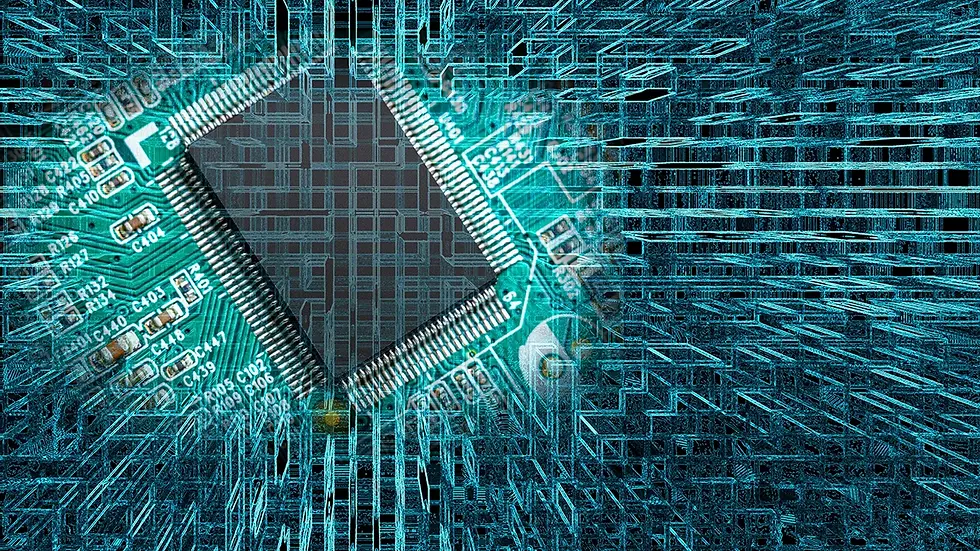
As technology evolves, the demands on PCB assembly continue to grow. Key trends of pcb assembly in data centers shaping the future include:
Increased adoption of assembled PCBs in AI servers
Higher-density designs for compact and powerful systems
Advanced materials usage increase for better thermal management
Integration of automation and smart manufacturing
Growing demand for energy-efficient designs
These trends highlight how the role of PCB in data center environments will continue to expand in the coming years.
Conclusion
PCB assembly is the backbone of modern server and data center infrastructure. From enabling high-speed data processing to ensuring system reliability, its impact is both fundamental and far-reaching.
As data centers continue to evolve with AI, cloud computing, and enterprise demands, investing in high-quality PCB assembly services for data centers becomes essential for long-term success.
If you are planning a new deployment or upgrading existing infrastructure, get in touch with our team to discuss how we can support your server and data center PCB assembly needs.


